
Most enquiries open with the same sentence: we need the windows and doors customized. The useful follow-up question is customized where — because an aluminum fenestration package is a system of frames, sashes, glass, hardware and finishes, and some of those elements can be changed freely while others are fixed by the tested performance and certification behind them. This guide separates the flexible part from the fixed part so the brief you send is one a fabricator can quote without guesswork.
Dimensions and Opening Types
Width, height and sash configuration are the most commonly customized attributes, and they are also the ones that interact with performance. A larger sash carries more glass, which increases its weight and changes the load on hinges, stays and operating gear — so an oversized panel usually means a heavier hardware set and sometimes a different system. Fixed lights, top-hung, side-hung, tilt-and-turn, inward and outward opening configurations can all be produced to a schedule; what matters is that the opening schedule is complete, including the units that are rarely drawn carefully, such as access panels and service openings.
System Selection: Windows, Doors, Sliding and Façades
The system is the largest single customization decision because it fixes the performance envelope. Our range covers window systems, entrance and internal door systems, lift-slide and tilt-slide sliding systems, and façade and curtain wall systems — the full list is under aluminum window systems — including large skylight windows and automated door units. Selecting the system first, and then customizing within it, is far more efficient than specifying every dimension and hoping a system exists that can carry it.
Glazing Build-Up
Glazing is where customization has the largest effect on energy performance. The number of panes, the type and position of Low-E coating, the cavity gas fill, the spacer technology and the glass thicknesses can all be specified to hit a target U-value, solar control or acoustic requirement — these levers are compared in the glazing guide. Because glass is typically the majority of a unit's area, the glazing specification usually determines whether the whole assembly meets its target — which is why it is worth setting the U-value, SHGC and acoustic targets before choosing glass.
Hardware and Operating Convenience
Hardware is specified rather than assumed. Handle and hinge ranges, locking points, concealed versus exposed gear, restrictors, motorized and automated operation, and integrated shading can all be selected against the opening type and the level of use. For high-traffic entrances or automated doors the hardware selection is a project decision, not a line item to be defaulted, because it determines both service life and how the entrance behaves on a daily basis.
Finish and Color
Finish can be matched to a color reference, and the coating system can be chosen to suit the exposure — inland, coastal, or industrial. Where a project has an approved color schedule, that schedule should be attached to the enquiry rather than described in words, because appearance between a photograph, a screen and a coated profile is exactly where disputes start.
Packaging and Branding
Packaging is part of the customization, not an afterthought. Neutral or custom logo packaging is available on request, and unit marking, protection strategy and how the frames and glass are separated for shipment can be set to suit a site delivery or a distributor warehouse.
What Cannot Be Customized — and Why
- The tested performance of a changed section — published Uw values belong to a specific system, glazing build-up and sash size. Change the build-up and the number has to be recalculated, not inherited.
- Sash size beyond the system limit — every system has a maximum sash area and weight set by the hardware and the profile. A larger panel is a different detail, not a bigger version of the same one.
- Certification scope — certification applies to the products and processes within its scope. A new process, material or system outside that scope has to be confirmed before it can be claimed.
- Structural performance of a base system — wind load, watertightness and air permeability ratings belong to the tested assembly, and they do not transfer to a re-detailed version.
- Glass beyond the available specification — coatings, thicknesses and cavity configurations exist in standard combinations; an unusual build-up adds lead time or becomes a special order.
What to Fix Before You Brief a Supplier
- Freeze the opening schedule, including the awkward units.
- State the environment — inland, coastal or industrial — because it decides the finish.
- Set the U-value, solar control and acoustic targets before choosing glass.
- Confirm the hardware requirement for high-use openings.
- Attach the approved color schedule rather than describing it.
- Confirm whether packing is neutral or carries your logo.
Customization at Our Factory
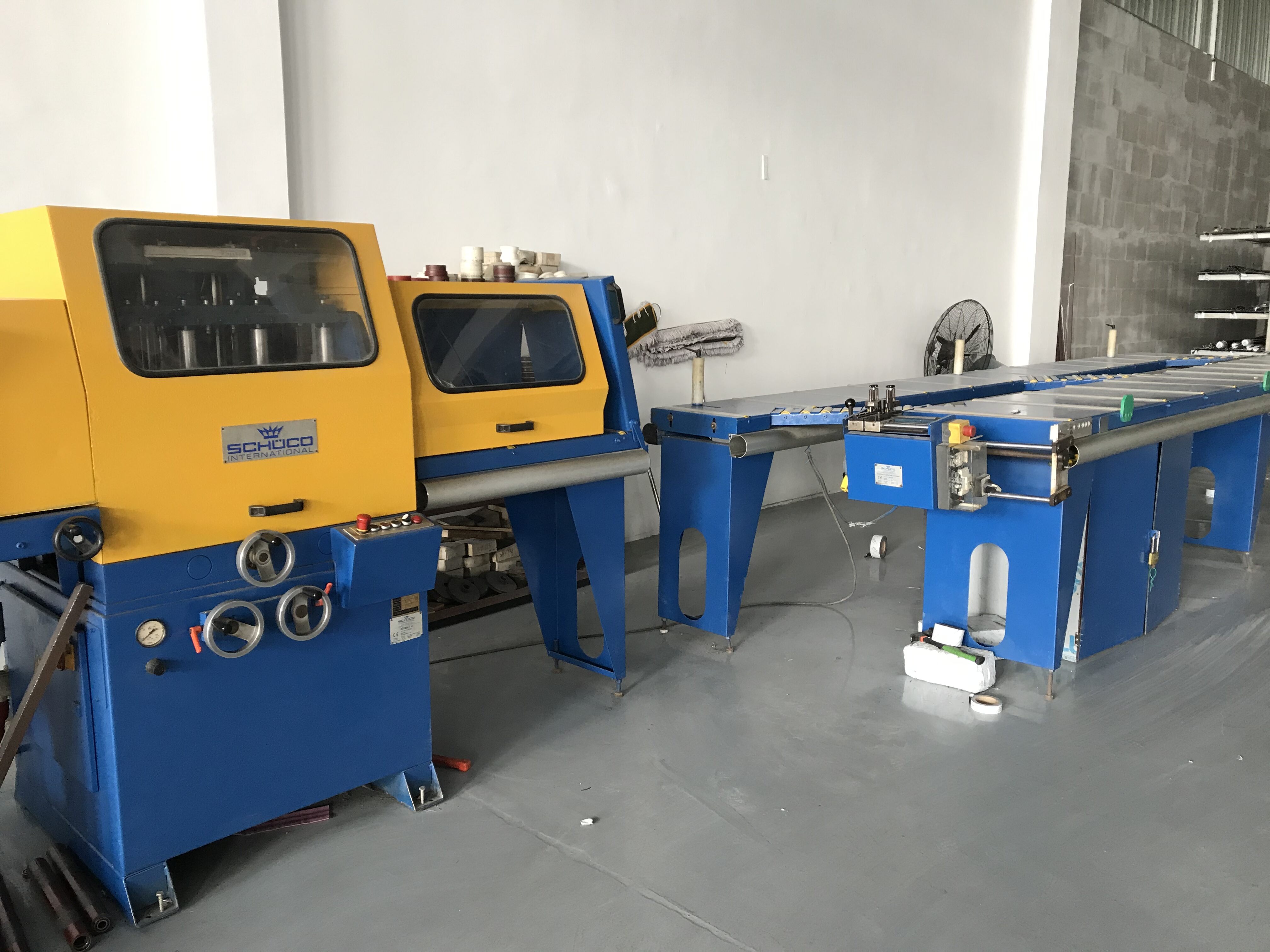
Shanghai Ruishi Window & Door has produced high-end aluminum window, door and curtain wall systems for more than 20 years, and has been a core strategic partner of Schüco International (Germany) since 2005. As the authorized fabrication partner in Shanghai — recognized with the "Schüco China Quality Partner" award in 2019 — more than 90% of our business comprises Schüco system products.
Our 5,000 m² facility in Jinshan District, Shanghai runs on imported German Schüco machinery and Italian CNC processing centers, with an annual production capacity of 100,000 m² and complete in-house production from thermal break assembly to final hardware installation.
For the performance side of the specification — U-values, chambers and thermal breaks — see thermal break aluminum windows explained, and the usual commercial questions are answered on our FAQ page.
Send us your drawings, opening schedule and performance targets and we will return a system recommendation, glazing specification and quotation with a full technical datasheet — free of charge.